Why the Right Tooth Point Makes a Difference
The tooth tip is sharp and well-fitted; the force of the machine is concentrated over a small area, and this enables the bucket to break up the hard ground with less effort. When the tip wears down and becomes rounded, the machine has to push with greater force to achieve the same result.
That extra effort shows up in several ways. Cycle times get longer, fuel consumption goes up, and the hydraulic system, pins and bushes all carry more load than they should. On a busy site, a set of worn teeth can quietly cost far more than the price of replacing them.
Teeth also protect the bucket. The tooth point is designed to be the part that wears out, so the adapter and the bucket lip behind it last longer. Replacing points on time is one of the cheapest ways to protect a much more expensive bucket.
Types of Tooth Points We Supply
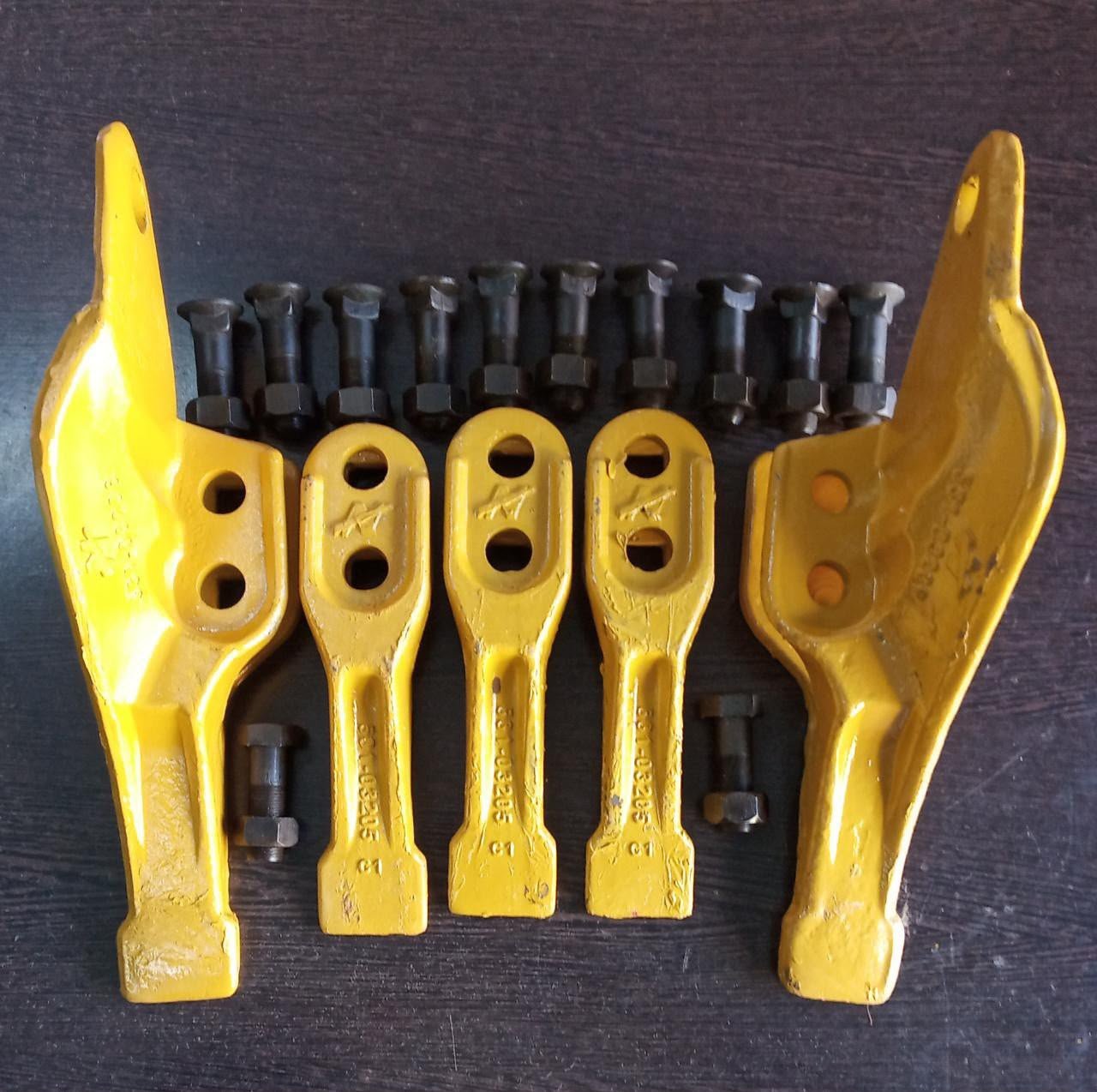
Different jobs call for different tooth shapes. Choosing the right profile for your ground conditions improves digging performance and extends the life of each set.
| Tooth Type | Best Suited For |
|---|---|
| Standard or general purpose | Everyday digging in mixed soil, loading and general site work |
| Rock or heavy duty | Hard, compacted and rocky ground where extra wear material is needed |
| Penetration or sharp | Hard-packed clay and frozen or dense soil that needs a pointed tip |
| Twin tiger or tiger | Trenching and breaking through tough ground in narrow cuts |
| Flat or wide | Loading loose material and finishing work where a smooth floor is needed |
If you are unsure which type suits your work, tell us what kind of ground the machine works in most of the time. We will suggest a tooth profile that balances penetration and wear life for that job.
JCB 3DX Bucket Teeth and Excavator Bucket Teeth: What Is the Difference?
The term JCB 3DX bucket teeth often refers to teeth on backhoe loaders such as the popular JCB 3DX, but it also covers JCB tracked excavators. Backhoe loaders usually carry teeth on the rear digging bucket, while the front loader bucket may use a bolt-on cutting edge or teeth depending on its design.
The bucket teeth on excavators are usually bigger and more heavy-weight since tracked excavators have to work at greater digging forces and frequently dig into rock or other tough materials; the tooth systems, adapter sizes, and locking mechanisms correspond to the machine class and bucket size.
This is why the brand and model of your machine matter when ordering. A JCB tooth will not always fit another brand's adapter, and even within one brand, different machine sizes use different tooth systems. We stock and source tooth points for JCB, Hyundai, Tata Hitachi, Komatsu, Volvo and CAT machines so that a single call can cover a mixed fleet.
Signs Your Bucket Teeth Need Replacing
It is quite common to continue using the bucket after the bucket teeth wear out. Here are some indications that should raise a red flag:
- The teeth are rounded, and the bucket can no longer dig into the ground.
- The tooth has worn close to the adapter, leaving little wear material in front of it.
- Teeth are cracked, chipped or broken after hitting rock or concrete.
- One or more teeth are missing, putting extra load on the remaining teeth and the bucket lip.
- The machine needs more time and fuel to fill the bucket than it did before.
- The locking pin or retainer is loose, and the tooth moves on the adapter.
If the tooth wears through to the adapter, the adapter itself starts to wear. Replacing an adapter usually involves cutting and welding, which takes the machine off the job for longer. Changing the points before that stage keeps costs down.
Tooth Points, Adapters and Locking Pins
A complete tooth system has three parts. The tooth point is the replaceable wear part at the front. The adapter is welded or bolted to the bucket lip and holds the tooth in place. The pin and retainer lock the tooth onto the adapter.
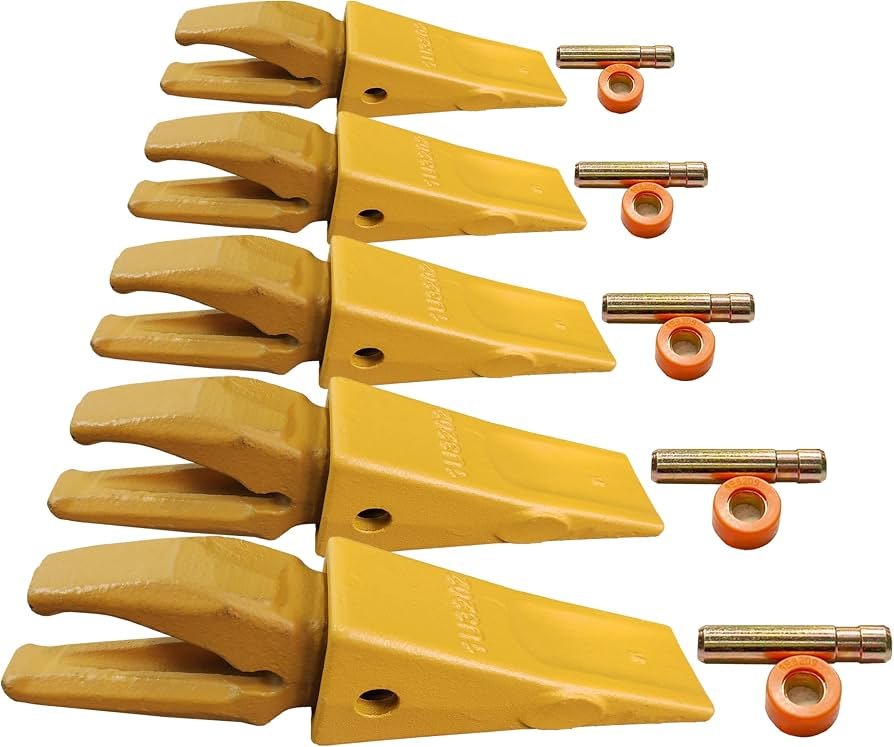
All three need to match. A new tooth on a badly worn adapter will not sit firmly, will move as the bucket works, and may fall off. Worn pins and retainers can also allow the tooth to come loose. When you order teeth from us, we check whether the adapters and locking hardware also need attention, and we supply bucket tooth adapters as well.
How to Choose Good Quality JCB 3DX Teeth
Not all teeth that look alike perform alike. The material and the way a tooth is made decide how long it will last in real working conditions.
- Material and hardness. Good tooth points are made from alloy steel and heat-treated so that the surface is hard enough to resist wear while the core stays tough enough not to crack. A tooth that is too soft wears fast, and one that is too brittle can snap on rock.
- Correct fit. The tooth should slide onto the adapter and sit firmly with minimal play. A poor fit increases stress on the locking pin and the adapter nose.
- Right profile for the job. A general-purpose tooth will wear quickly in rock, while a rock tooth may feel slow in loose soil. Matching the profile to the work gives the best life from every set.
- Genuine or tested OEM-equivalent. We supply genuine and OEM-equivalent JCB teeth and tooth points, and we check every part before it leaves our counter.
Fitting and Getting More Life From Your Teeth
A few simple habits can add many working hours to your tooth points. Check the teeth during the daily walk-around, along with the locking pins. Secure any tooth that starts to move immediately, before it damages the adapter.
- Rotate the teeth where the design allows it. Corner teeth usually wear faster than centre teeth, so swapping their positions spreads the wear more evenly.
- Avoid using the bucket to hammer or pry against rock and concrete. Breaking hard material is a job for a rock breaker, not the bucket teeth. Operating with the correct bucket angle also reduces uneven wear on the tips.
- Replace the full set when most teeth are worn. Mixing very old and new teeth on one bucket makes the new ones carry more of the load and wear faster.
Other Parts That Wear Alongside Your Bucket Teeth
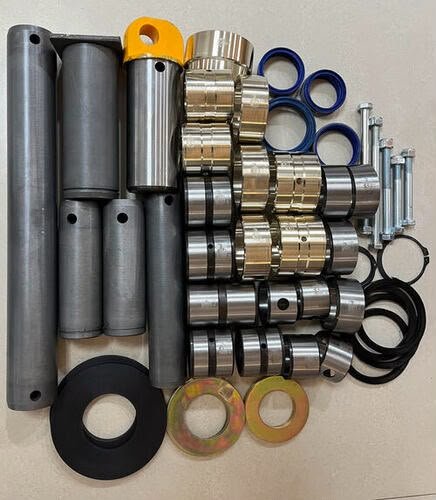
Heavy digging affects more than just the bucket. The pins and bushes at the bucket and arm joints carry the same digging load and develop play over time. If your bucket feels loose when it moves, check our JCB pin bush kits and excavator pins.
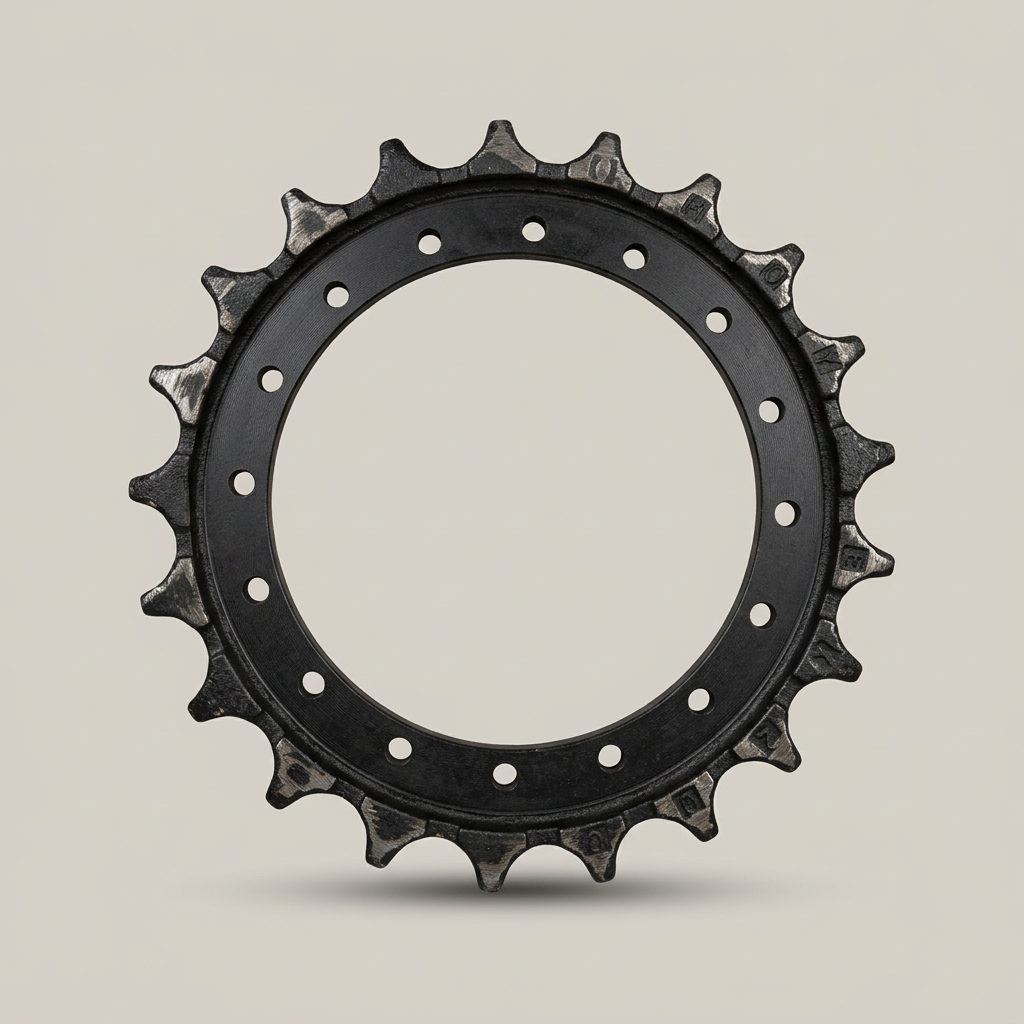
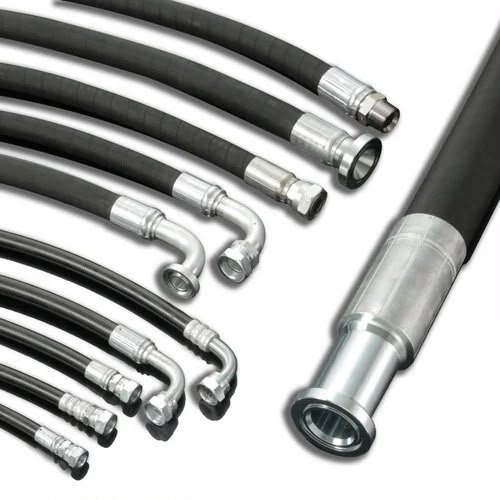
Digging in hard ground also places heavy demands on the hydraulic system. If the machine feels slow or weak even with fresh teeth, the cause may be in the hydraulic pump parts or a leaking hose. We build and repair hydraulic hose pipes at our workshop. For tracked excavators, we also supply the excavator drive sprocket and other undercarriage parts.
Why Operators Buy Bucket Teeth From K.G. Diesel
For more than 30 years, contractors, machine owners and operators across North India have relied on our counter in Manimajra for JCB spare parts and parts for other leading brands.
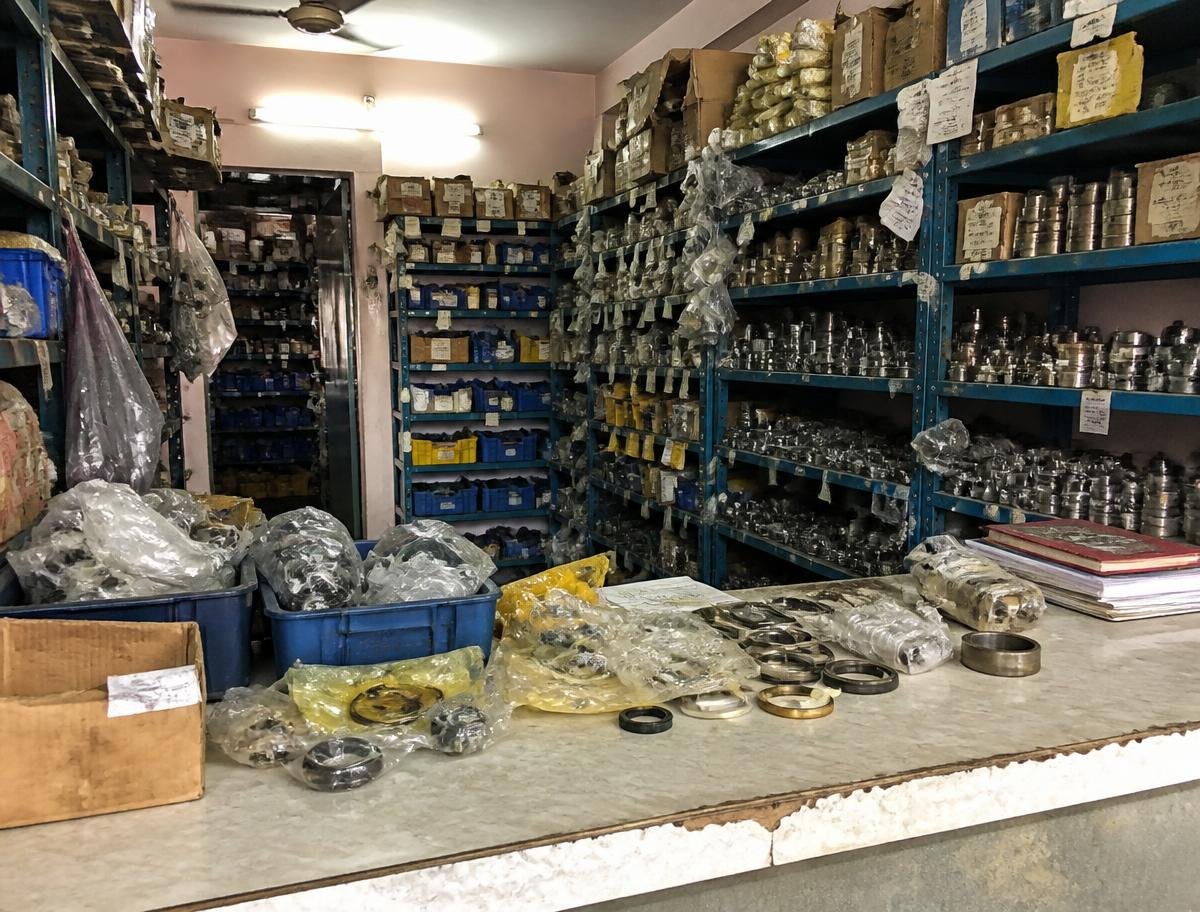
- Over 1500 parts in stock, including bucket teeth, tooth points and adapters for multiple brands.
- Genuine and OEM-equivalent parts, each checked before dispatch.
- One counter for JCB, Hyundai, Tata Hitachi, Komatsu, Volvo and CAT machines.
- Same-day and next-day dispatch across Punjab, Haryana, Himachal Pradesh, Rajasthan and Uttarakhand.
- We can source parts not on the shelf upon request.
Frequently Asked Questions
Certainly. We offer bucket teeth and tooth points for JCB backhoe loaders, covering the models that are commonly used, as well as for JCB tracked excavators. Just let us know the model of your machine and we'll be able to confirm the right part for it.