What a Track Roller Does on an Excavator
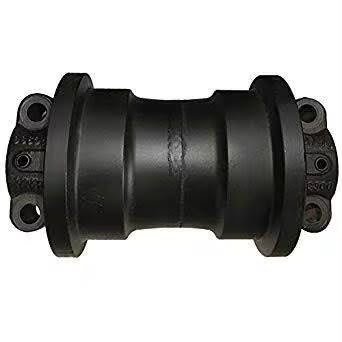
The track rollers, also called bottom rollers, are mounted in a row along the underside of the track frame. Rollers ride on the track chain and support the weight of the equipment.
Movement of the chain causes rotation of the rollers about their axis to maintain the chain straight and in alignment. The flanges of the roller prevent the chain from shifting off-line, and that function is particularly vital for the performance of a machine on an incline and when it is turning under load.
Since they take all the weight at all times, track rollers are some of the most used parts in any tracked machine. Their state will affect the operation of the machine and lifespan of other undercarriage components.
Track Roller or Carrier Roller: Knowing the Difference
Customers sometimes ask for a track roller when they actually need a carrier roller, or the other way round. Both are rollers in the undercarriage, but they do different jobs.
- Track rollers are fitted below the track frame and carry the full weight of the machine.
- Carrier rollers, also called top rollers, are fitted above the track frame and support the upper run of the track chain.
- Track rollers are larger and built for heavy load, while carrier rollers handle much lighter loads.
Track rollers also come in single flange and double flange designs, and most machines use a combination of both in a set order along the frame. When you replace a roller, it must match the flange type of the one you remove.
A Note on the Track Roller for JCB
JCB is best known in India for its backhoe loaders, which run on wheels and do not use track rollers. When people search for JCB, they are usually looking for rollers for JCB tracked excavators.
The rollers for your machine are model-specific. The frame width, shaft diameter, mounting bolts configuration and roller height should be matched. This is the reason why we ask you for the model number and even the part number of the needed roller.
Signs That It Is Time to Change the Roller on Your Excavator
Roller failure seldom happens without signs. You can determine what is wrong with your excavator just by taking a walk-around of your machine at the end of your shift.
Oil Leaking From the Roller
Track rollers are filled with oil and closed with seals at each end. The presence of spots where the roller is located usually suggests that a seal is broken. The bearings will become dry after all the oil has leaked out.
A Non-Rotating Roller
A seized roller drags against the track chain instead of rolling with it. This causes a flat area to form on the roller and damages the chain rails. If there is a roller that has a smooth flat surface, or one that doesn’t turn when the machine moves, then it needs to be examined immediately.
Worn Tread or Flanges
The tread is the surface that runs against the chain. Over time it wears down and the roller loses height. Thin or chipped flanges are another warning sign, because they allow the chain to wander sideways and can lead to the track coming off.
Uneven Track Movement
A jerky movement, strange sounds emanating from beneath the machine, or a track that is running low on one side might be an indication of worn-out or broken rollers. These problems should be checked out before a breakdown occurs on site.
What Shortens Track Roller Life Some wear is inevitable, but there are a few everyday actions that can lead to the rollers wearing much quicker than necessary.
- Tightening the track, thereby increasing friction and loading on each roller.
- Leaving packed mud, clay or stones in the undercarriage, especially overnight in cold weather.
- Spending long periods travelling at high speed instead of working.
- Working constantly on one side of a slope, which loads the flanges unevenly.
- Ignoring a single leaking or seized roller, which then damages the chain.
These can be attributed to daily routines. One of the easiest ways to achieve this is by cleaning the undercarriage at the end of the day and regularly testing the track tension.
Site Conditions and Track Roller Wear
The surface that your machine works on will greatly influence the life of your rollers. In rocky hills, which are common in Himachal Pradesh and Jammu & Kashmir, the rollers will be subjected to shock loads and the flanges will wear out on the slopes.
As regards the wet clay and riverbeds in the plains, the hard packed soil and coarse sand will wear down the tires and get at the seals. Knowing what you'll be working in will assist you to prepare for the inspection and provision of rollers before the busy period starts rather than being surprised by a breakdown.
How to Pick a Good Track Roller
Not all track rollers are equal. This is how you pick a good one.
Material and Heat Treatment
The roller shell should be made from alloy steel, which is very resistant, and the tread should be heat-treated in order not to become brittle. Bad heat treatment can easily be detected through fast tread wear or cracked flanges.
Sealing
The seals keep oil in and dirt out. Excavator rollers usually have seals that float and that are made to work in muddy and dusty environments. It is generally the difference between making it as a roller and not surviving long.
Correct Dimensions
Even in cases where a roller is manufactured well, it would quickly wear if it does not fit the frame and chain. The roller's height, tread width, flange and shaft diameter should also be right for the machine.
How to Order Your Track Roller for Excavator
Ordering the right roller becomes easy with proper information. Before you contact us, try to collect the following:
- Machine make and model, for example the exact JCB tracked excavator model.
- Part number from the old roller or the parts manual, if available.
- Whether you need single flange or double flange rollers, and how many of each.
- Clear photos of the roller and its mounting.
- Serial Number of the Machine in case there have been various versions of the model.
In this way, we will be able to see the compatibility of the part, and we will know that the order you placed is the right one. Besides, it will save you the trouble and expense of sending back a part which is not compatible.
Rebuilding the Track Rollers: Tips and Recommendations
When one roller fails sooner than the others, replacing only that one and finding out what caused it to fail should be enough. When several rollers are worn almost the same amount, sometimes it is better to change them all at once so that your machine rests evenly on the chain.
It is also recommended to inspect other components of the undercarriage at the same time. They wear simultaneously, and an idler or chain worn out will wear out the new rollers too quickly.
Replacement of the rollers when the chain is near its end of life is quite uneconomic. The track tension should be adjusted to the value specified in the operator’s manual after installation.
Track Rollers and Other JCB Spare Parts From One Supplier
Undercarriage parts are only one part of keeping a machine working. K.G. Diesel Spares & Services supplies a range of JCB spare parts and parts for other earthmoving machines, so you can source what you need from a single point of contact.
If your machine also needs work on its braking system, see our page on the hydraulic brake cylinder and seal kits. For our full range of parts and services, visit the KG Earth Movers homepage.
FAQs: Track Roller for Excavator
Track rollers carry the weight of the machine and transfer it to the track chain. They also guide the chain so that it runs straight and stays on the frame.